Postpartum
How do I know if I have postpartum depression?
May 15, 2026 · 8 min read · By Cindy Weathers, LMFT, CGP
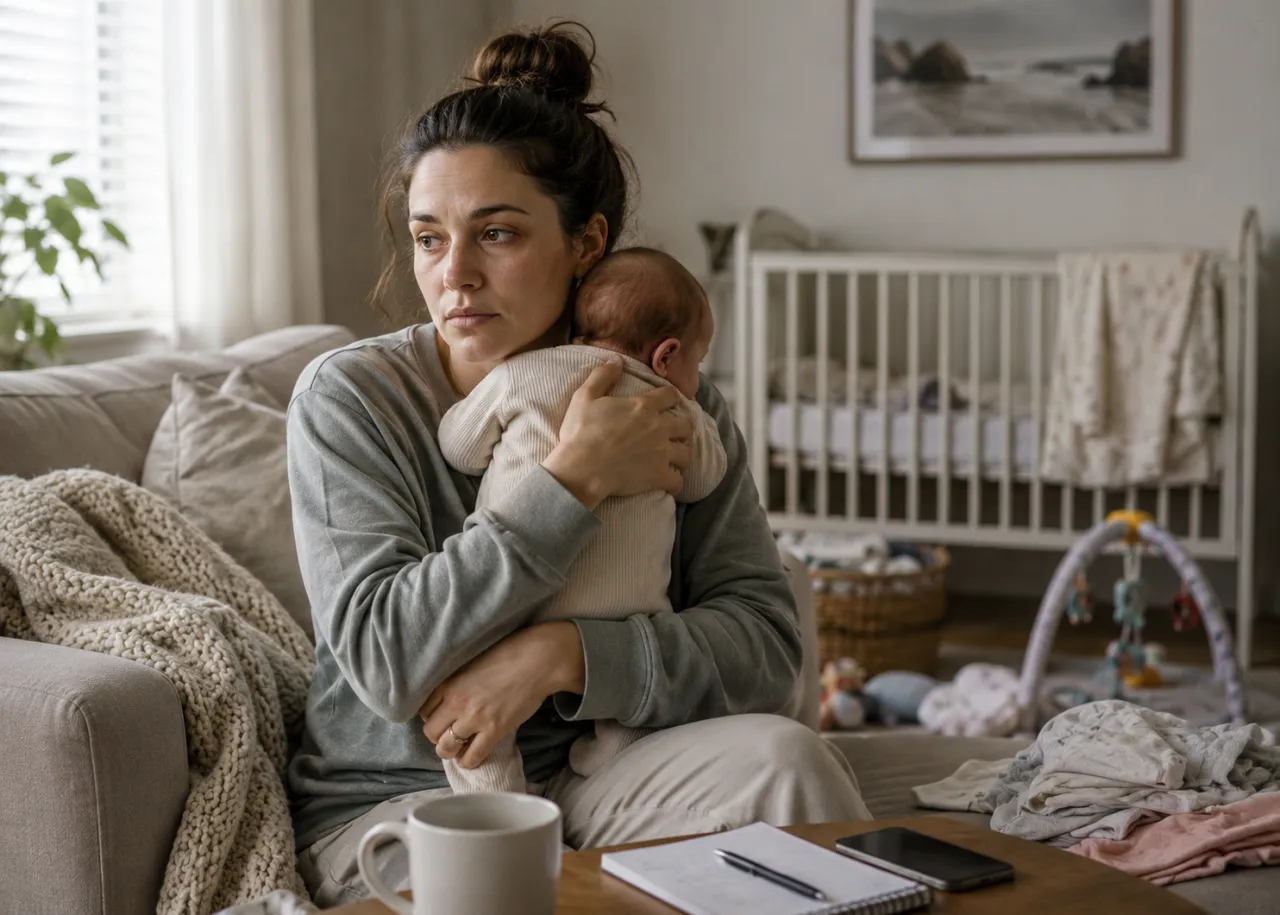
Postpartum depression affects about 1 in 7 women in the first year after giving birth — and most don't get diagnosed until they're already deep in it. If you're reading this asking whether what you're feeling is postpartum depression, that question alone is worth taking seriously.
Here's what to know, in plain language.
The short answer
If sadness, hopelessness, irritability, or a sense of disconnection has lasted more than two weeks after birth, and it's making daily life harder, it likely qualifies as postpartum depression. You don't have to feel suicidal or unable to care for the baby to have PPD — many women function on the outside while drowning on the inside.
Postpartum depression vs. the baby blues
The first thing to understand is the difference between the baby blues and postpartum depression. They are not the same thing.
Baby blues
Affect about 80% of new mothers. Start within a few days of birth, peak around day five, and resolve within two weeks. Symptoms include crying spells, mood swings, anxiety, and feeling overwhelmed — but they ease without treatment.
Postpartum depression
Lasts longer than two weeks. Can start anytime in the first year (even months after birth). Doesn't get better on its own. Affects functioning — sleep, appetite, ability to bond, sense of self.
If you're past the two-week mark and things aren't improving, you're not still in baby blues territory. You're in something that needs attention.
Common symptoms of postpartum depression
Postpartum depression looks different in different people. Some symptoms are obvious. Others — especially in high-functioning women — are easy to miss.
What postpartum depression often looks like in high-functioning women
This is the version I see most often in my practice. The outside world doesn't notice anything is wrong because she's still:
But the inside experience is:
If this sounds familiar — that's high-functioning postpartum depression. It's real. It's treatable. And it doesn't have to be the worst-case picture to qualify.
When postpartum depression can start
PPD doesn't always show up right after birth. The most common surge points are:
If your provider only screened you at the 6-week check-up and said you were fine, that's not the end of the story. PPD can show up months later.
When to seek help for postpartum depression
Please reach out to a perinatal-trained therapist if:
If you're having thoughts of harming yourself or the baby, that's an emergency. Call or text **988** (Suicide & Crisis Lifeline) or the Postpartum Support International helpline at **1-800-944-4773**. You will not be in trouble. You will get help.
How postpartum depression is treated
Most cases of PPD respond well to one or more of:
What I want you to know if you're reading this at 2 a.m.
Postpartum depression doesn't mean you don't love your baby. It doesn't mean you're a bad mother. It doesn't mean this is permanent.
It means your nervous system is in real distress, often combined with hormonal shifts, sleep deprivation, and a life that has changed faster than any person can metabolize on their own.
There is a way through. And it's not white-knuckling your way to the baby's first birthday.
If you'd like to talk, I offer a free 15-minute phone consultation. The reproductive mental health community in Westlake Village and across California is small and well-connected — even if I'm not the right fit, I'll help you find someone who is.
If you're navigating this
Therapy is one of the most reliable ways to move through what this post describes. Learn more about how I work with this →
Cindy Weathers is a Licensed Marriage & Family Therapist (CA LMFT #81539) and Certified Group Psychotherapist with an office in Westlake Village and telehealth across California.